


Butterfly Valve
Triple Offset Butterfly Valves(TOBV)
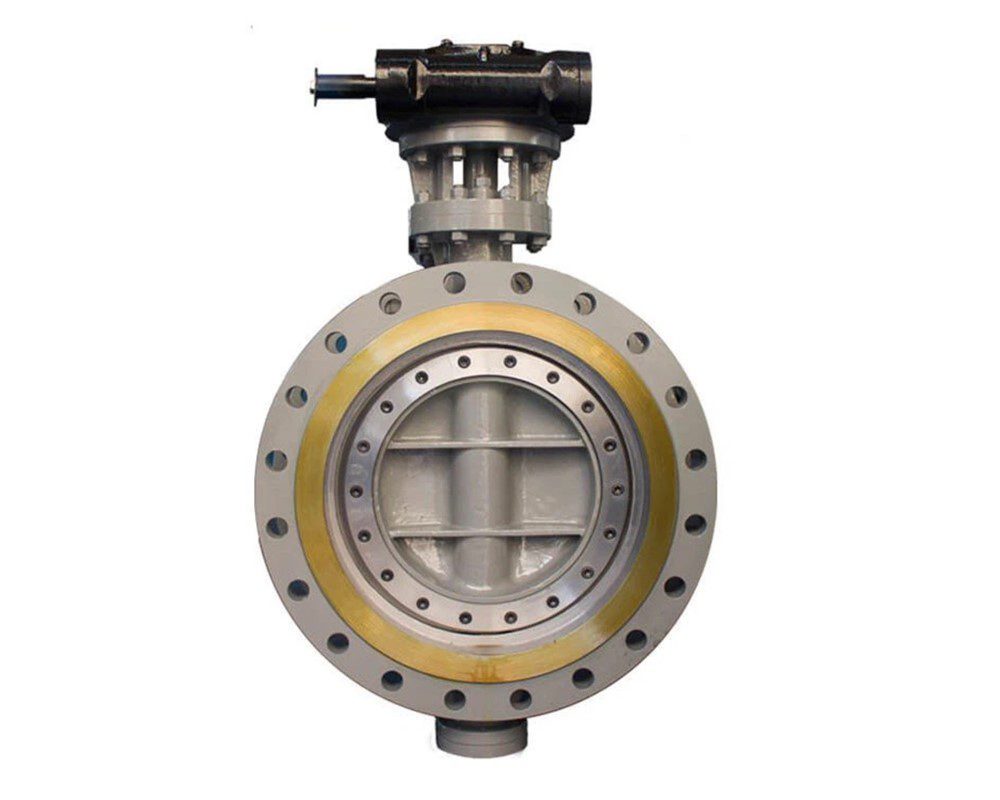
Triple offset butterfly valves are a specialized type of butterfly valve that offer superior sealing performance, extended service life, and lower maintenance requirements compared to standard butterfly valves.
Inquire Now
Specifications
Butterfly Valve – Tripple Offset Butterfly Valves(TOBV) Size Range
NPS 3 to 48 / DN 80 to 1200
Larger sizes available upon request
Body Materials
Carbon Steel, Stainless Steel
Other Materials Upon Request
Temperature Range
-320°F to 842°F (-196°C to 450°C)
Higher temperatures upon request
Stem Materials
17-4PH, 410 Stainless Steel, XM-19 (Nitronic 50)
Maximum Allowable Operating Pressure
ASME Class 150, 300, 600, 900
EN 1092 PN 10, 16, 25, 40, 63, 100, 150
Seat Materials
316 Stainless Steel Hardened
Shutoff Rating
Zero Leakage
Disc Materials
Carbon Steel, Stainless Steel
Other Materials Upon Request
Body Style
Lug, Wafer, Double Flanged, Gate, Buttweld
Design Standard
API 609, ASME B16.34, ASME VIII, API 600
Flange Drilling
ASME B16.5, ASME B16.47, EN 1092, ISO 7005
Testing Standard
ISO 5208, EN12266-1, API 6D, API 598, BS 6755
Certifications
ABS, API 607, ATEX, CRN, ISO 10497, PED, PE(S)R, SIL, TR CU, TSG
Face To Face
API 609, ASME B16.10, ISO 5752, EN 558
Fugitive Emissions Standard
ISO 15848-1, API 641, TA Luft
Applications
Bulk liquid storage, oil & gas, LNG storage & transportation, steam distribution systems, power generation, geothermal steam, sugar & ethanol, pulp & paper liquor, refining, chemical processing, water & wastewater, air separation, cryogenic services
Features:
- Triple Offset Design: The key feature is the three intentional offsets in the valve body. These offsets position the disc so that it contacts the seat in a camming action only at closure, minimizing friction during operation . This reduces wear on the sealing surfaces and allows for a tighter seal.
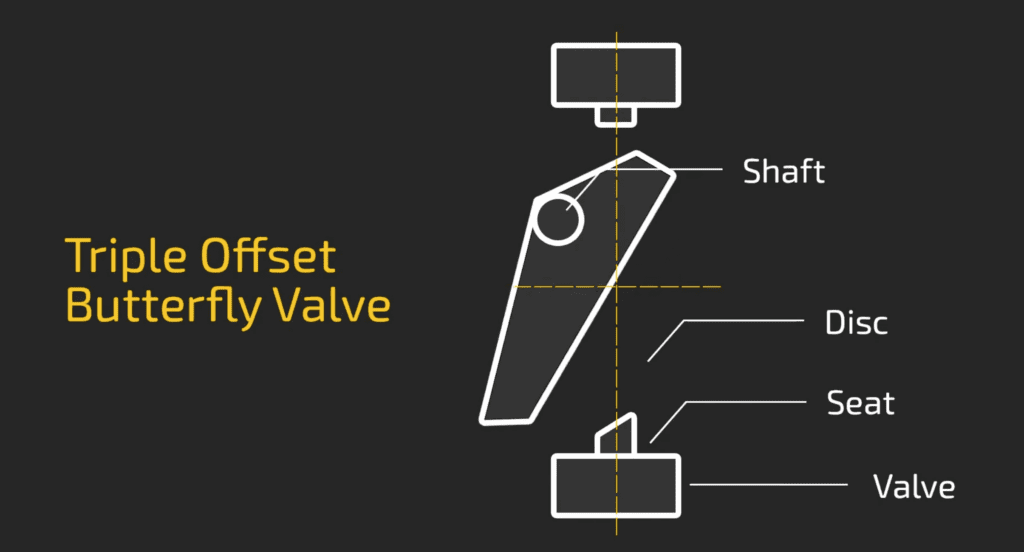
2. Metal-to-Metal Sealing: Triple offset butterfly valves typically use a metal-to-metal seat design, eliminating the need for elastomers or soft materials that can deteriorate over time or with exposure to harsh chemicals.
3. No Cavities: The design eliminates gaps or cavities between the sealing surfaces, preventing particles from getting trapped and compromising the seal.
Benefits:
- Bubble-Tight Shut-Off: Due to the features mentioned above, triple offset butterfly valves achieve a “bubble-tight” closure, meaning no leakage even at very low levels. This makes them ideal for critical applications where even minimal leakage cannot be tolerated.
- Low Operating Torque: The reduced friction during operation translates to lower torque required to open and close the valve. This simplifies automation and reduces the size and power of actuators needed.
- Long Service Life: The minimal wear on the sealing surfaces due to the offset design extends the operational life of the valve significantly.
- High-Pressure and Temperature Capability: The metal-to-metal sealing and robust design allow triple offset butterfly valves to handle high-pressure and high-temperature applications.
- Reduced Maintenance: With fewer moving parts and a more durable design, triple offset butterfly valves require less frequent maintenance compared to standard butterfly valves.
- Wide Range of Applications: Their suitability for clean fluids, harsh chemicals, high pressures, and high temperatures makes them a versatile choice across various industries like oil & gas, power generation, chemical processing, water treatment, and marine applications.
Triple offset butterfly valves offer a superior sealing performance, longer lifespan, lower maintenance requirements, and wider applicability compared to standard butterfly valves. However, they may come at a higher initial cost.
FAQs:
A. What are the advantages of triple offset butterfly valves?
- Bubble-tight shut-off: Ensures no leakage even at minimal levels, ideal for critical applications.
- Low operating torque: Requires less force to open and close, simplifying automation.
- Long service life: Reduced wear and tear leads to extended operation.
- High-pressure and temperature capability: Handles demanding environments.
- Reduced maintenance: Fewer moving parts and a durable design minimize maintenance needs.
- Wide range of applications: Versatile for various industries due to its robust features.
B. What are the disadvantages of triple offset butterfly valves?
- Higher cost: Fabrication process can be more expensive than standard butterfly valves.
- Limited throttling capability: Not ideal for precise flow control applications.
- Directional flow: While some can handle bi-directional flow, some models have a preferred flow direction for optimal sealing.
C. When to use a triple offset butterfly valve?
-
These valves are ideal for applications requiring:
- Leak-proof operation: Chemical processing, power plants, oil & gas pipelines.
- High-pressure or high-temperature environments: Power generation, steam lines, hot oil systems.
- Low-maintenance solutions: Industrial plants seeking to minimize downtime.
D. What are some things to consider when selecting a triple offset butterfly valve?
- Pressure and temperature rating: Choose a valve exceeding your application’s requirements.
- Pipe size and flange type: Ensure compatibility with your piping system.
- Material selection: Select appropriate body, disc, and seat materials for the fluid being handled.
- Actuation type: Decide on manual, pneumatic, or electric actuation based on automation needs.
- Flow direction: Consider if a bi-directional or unidirectional flow valve is needed.
E. How does a triple offset butterfly valve differ from a double offset butterfly valve?
Triple offset valves have an additional offset in the seating surface compared to double offset valves. This extra offset creates a camming action that eliminates disc-to-seat contact during most of the opening and closing cycle, leading to even lower friction and longer lifespan.