


Gate Valve
Bolted Bonnet Gate Valve
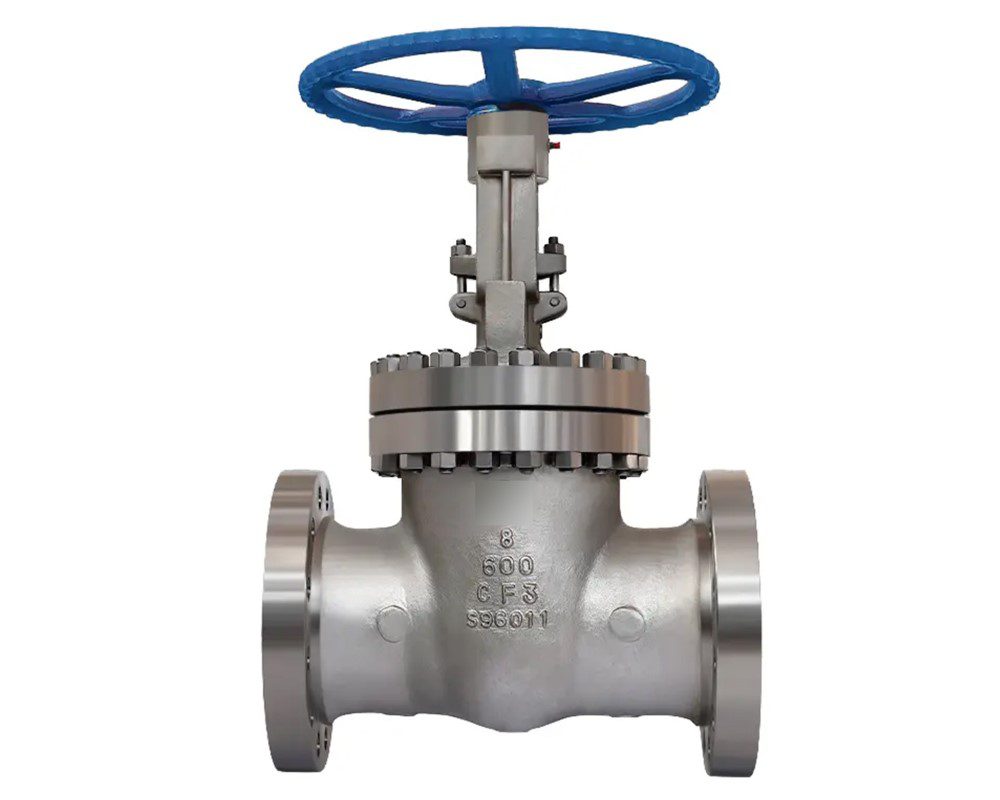
A bolted bonnet gate valve is a type of valve used to control the flow of fluids in piping systems. It features a bonnet that is bolted to the valve body, securing the internal components such as the gate, stem, and seating surfaces.
Inquire Now
Specifications
Gate Valve – Bolted Bonnet Size Range
2 – 56 NPS, DN50 – DN1400
Body Materials
Carbon Steels, Low Temperature Carbon Steel, Martensitic Steels, Austenitic Stainless Steel, Duplex Stainless Steels, Super Duplex Stainless Steels, Nickel Alloys, Nickel Aluminum Bronze, Hastelloy, Inconel, Titanium Alloy & Carbon Steel with Internal Corrosion Resistant Alloy (CRA) Overlay
Temperature Range
-29°C to 650°C
Trim Materials
Carbon Steels, Low Temperature Carbon Steel, Martensitic Steels, Austenitic Stainless Steel, Duplex Stainless Steels, Super Duplex Stainless Steels, Nickel Alloys, Nickel Aluminum Bronze, Hastelloy, Inconel, Titanium Alloy & Carbon Steel with Internal Corrosion Resistant Alloy (CRA) Overlay
Maximum Allowable Operating Pressure
ASME 150# to 2500#
Pressure-Temprature Rating
ASME B 16.34
Construction Details
Bolted Bonnet
Body Style
Flanged End, Butt Weld
Design Standard
API 600, BS 1414, API 6D
Flange Drilling
ASME B16.5
Testing Standard
API 598, API 6D, ISO 5208, API6FA, ISO 10497,BS6364
Face To Face
ASME B16.10
Applications
Refineries,Hydrocarbon,Energy and Process industries.
Operation
Handwheel, Gear, Actuator (Pneumatic, Hydraulic, Electro-Hydraulic and Electric Motorised)
Features:
-
Design and Construction:
- Gate Mechanism: Operates by raising or lowering a gate (wedge or parallel disc) to control flow.
- Bonnet: Securely holds internal components and allows for maintenance.
- Body: Designed for durability and often made from robust materials like carbon steel or stainless steel.
-
Operation:
- Rising Stem: The stem rises and lowers with the gate, providing a visual indication of the valve position.
- Bi-Directional Flow: Allows fluid to flow in both directions when open.
-
Sealing Mechanism:
- Metal-to-Metal Seal: Provides a tight shut-off to prevent leakage when closed.
- Flexible Wedge Design: Adapts to changes in temperature and pressure for reliable sealing.
-
Applications:
- Suitable for a wide range of fluids including water, oil, steam, gases, and more.
- Used in pipelines, refineries, chemical plants, power plants, and other industrial settings.
-
Pressure and Temperature Ratings:
- Designed to handle high-pressure applications up to ANSI Class 2500 and beyond.
- Can withstand temperatures ranging from cryogenic to high-temperature environments.
Benefits:
-
Reliability:
- Provides a straight-line flow path with minimal pressure drop when fully open.
- Offers dependable shut-off capabilities due to the metal-to-metal sealing.
-
Versatility:
- Suitable for both high and low-temperature environments, accommodating various industrial processes.
- Can be used in systems requiring infrequent operation or in applications where flow control is critical.
-
Durability:
- Constructed from durable materials capable of withstanding harsh operating conditions.
- Designed for longevity and minimal maintenance requirements.
-
Safety:
- Ensures safe operation with reliable shut-off capabilities, preventing potential hazards in industrial processes.
- Provides clear visibility of the valve’s status due to the rising stem design.
-
Maintenance:
- Bonnet design allows for easy access to internal components, facilitating inspection, repair, and replacement.
- Regular maintenance ensures continued performance and extends the valve’s service life.
FAQs:
What are the typical applications of bolted bonnet gate valves?
These valves are used in various industries including oil and gas, petrochemical, power generation, water treatment, and more. They are suitable for applications requiring bi-directional flow control and where a tight shut-off is necessary.
What materials are bolted bonnet gate valves typically made from?
They are commonly made from materials such as carbon steel, stainless steel, bronze, and alloys like Monel or Inconel. The material choice depends on factors like the fluid type, pressure, temperature, and environmental conditions.
How do you prevent leakage in bolted bonnet gate valves?
Proper installation, regular maintenance, and selecting the appropriate valve size and material are crucial for preventing leakage. Ensuring the gate and seating surfaces are in good condition and properly aligned when closed also helps maintain a tight seal.
What are some common sizes and pressure ratings for bolted bonnet gate valves?
They are available in a wide range of sizes, typically from 1/2 inch to 24 inches or larger, and can handle pressure ratings up to ANSI Class 2500 or higher, depending on the design and manufacturer specifications.
Can bolted bonnet gate valves be used for both on/off and throttling applications?
While gate valves are primarily used for on/off control due to their design, they can be used for throttling in certain conditions where flow control is not critical and where erosion and cavitation are not concerns.