
Ball Valves
2 Piece Design Floating Ball Valve
Split-body floating ball valve offering a full-bore option and easy seat replacement, widely used for isolation in water, air, oil and chemical services.
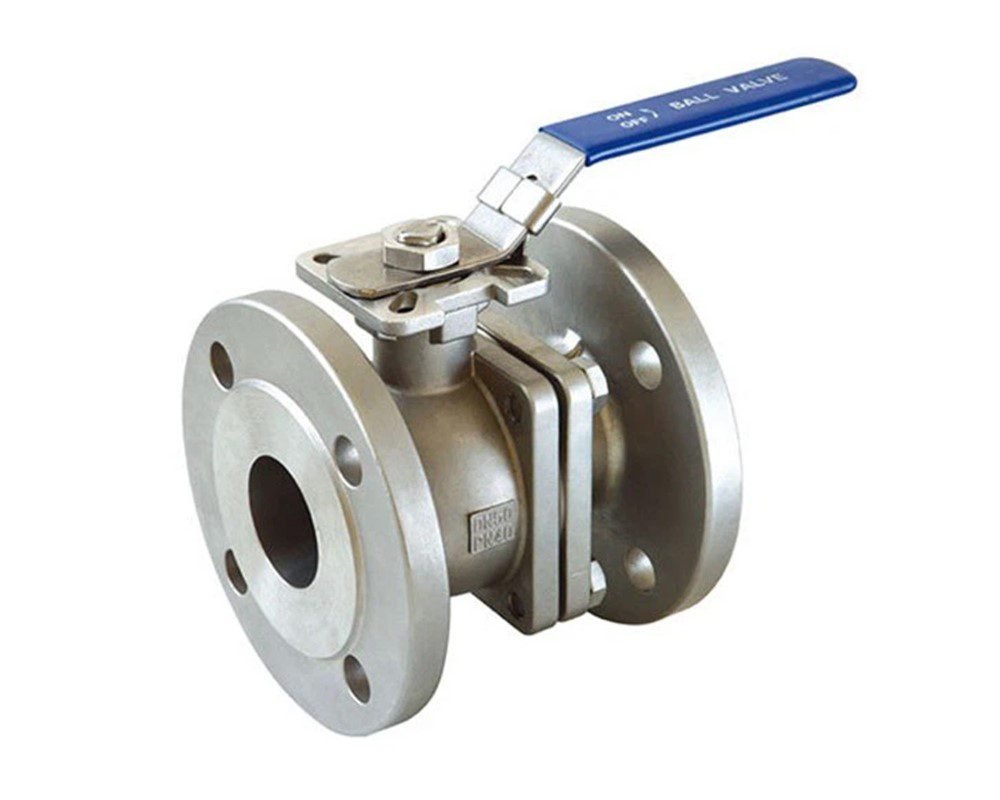
Overview
A floating ball valve is a type of quarter-turn valve used to stop or start the flow of liquids or gases through a pipeline. The ball in the valve is not fixed in place and floats slightly downstream to maintain contact with the seat under pressure.
Key features
- Modular Construction: Easy to disassemble for maintenance.
- Versatile Design: Allows for different end connections (flanged, threaded, welded).
- Durable Materials: Made from high-quality stainless steel or other alloys.
- Full Port or Reduced Port: Provides flexibility in flow control.
- Blow-out Proof Stem: Enhances valve safety.
- Adjustable Packing: Allows for tightening as needed to prevent leaks.
- Live-Loaded Stem Seals: Maintains seal integrity over time.
- Fire Safe Design: Withstands high temperatures and reduces fire risk.
- Anti-Static Device: Prevents static electricity buildup.
- Locking Device: Provides security by preventing unauthorized valve operation.
Technical specifications
- Size Range
- 1/2 – 12 NPS, DN15 - DN300
- Body Materials
- ASTM A216, A105, A350, A182, A351, A352, A890, A995.
- Temperature Range
- -29°C to 450°C
- Ball Materials
- ASTM A216, A105, A350, A182, A351, A352, A890, A995.
- Maximum Allowable Operating Pressure
- ANSI 150#, ANSI 300#, ANSI 600# , ANSI 900#
- Seat Materials
- PTFE, NYLON, PEEK, NBR, KELF, ENP (Electroless nickel plating), HC (Hard chrome).
- Shutoff Rating
- Bidirectional Bubble-tight
- Body Style
- Flanged End, Butt Weld, FE V/s BW
- Design Standard
- ISO 17292, API 6D, ASME 16.34
- Flange Drilling
- ASME B16.5
- Testing Standard
- API 598, ISO 5208, EN 12266-1
- Face To Face
- ASME B16.10
- Operation
- Pneumatic Actuator, Electrical Actuator
- Applications
- Oil & Gas, Wastewater, Seawater, Petrochemicals, Chemicals,Sugar, Paper
Applications
- Oil & Gas
- Wastewater
- Seawater
- Petrochemicals
- Chemicals
- Sugar
- Paper
Benefits
- Reliability: Ensures long-term performance and minimal downtime.
- Ease of Maintenance: Simplifies servicing and reduces maintenance costs.
- Operational Flexibility: Adapts to various applications and conditions.
- Safety Assurance: Meets industry standards for safety and reliability.
- Cost Efficiency: Lowers total cost of ownership over the valve’s lifecycle.
- Environmental Protection: Minimizes leakage and environmental impact.
- Smooth Operation: Offers smooth and precise flow control.
- Longevity: Resistant to wear and corrosion, extending service life.
- Application Compatibility: Suitable for a wide range of industries and fluids.
- Compliance: Meets regulatory requirements and standards for quality assurance.
Frequently asked questions
A floating ball valve has a ball that floats between the seats under pressure, while a trunnion-mounted ball valve has additional mechanical support from trunnions or bearings to withstand higher pressures.
Yes, floating ball valves are versatile and can handle both on-off service and moderate throttling applications depending on the design and specifications.
Maintenance schedules depend on operating conditions, but regular inspection, lubrication, and replacement of seals or components as needed can prolong valve life and ensure optimal performance.
Application engineering
Specify your requirement.
Share your process conditions, required configuration and quantity. Our team will confirm suitable options and available documentation.
Thank you — enquiry received
An application engineer will review your requirement and reply within one working day.