
Severe Service Valves
FCCU Slide Valves
Refractory-lined slide valves controlling catalyst flow in fluid catalytic cracking units at extreme temperature.
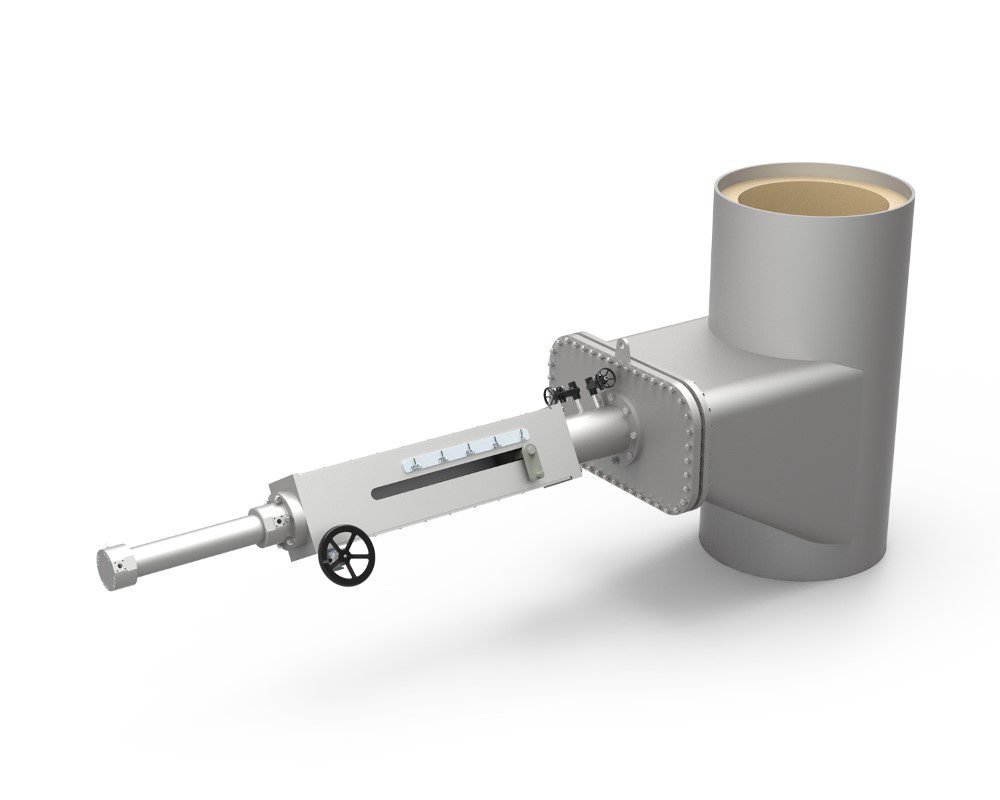
Overview
In a Fluid Catalytic Cracking Unit (FCCU), slide valves play a critical role in regulating the flow of catalyst between various stages of the process. These valves are designed for heavy-duty operation in high-temperature, high-pressure environments.
Key features
- Carbon Steels, Low Temperature Carbon Steel, Martensitic Steels, Austenitic Stainless Steel, Duplex Stainless Steels, Super Duplex Stainless Steels, Nickel Alloys, Nickel Aluminum Bronze, Hastelloy, Inconel, Titanium Alloy & Carbon Steel with Internal Corrosion Resistant Alloy (CRA) Overlay
- Carbon Steels, Low Temperature Carbon Steel, Martensitic Steels, Austenitic Stainless Steel, Duplex Stainless Steels, Super Duplex Stainless Steels, Nickel Alloys, Nickel Aluminum Bronze, Hastelloy, Inconel, Titanium Alloy & Carbon Steel with Internal Corrosion Resistant Alloy (CRA) Overlay
- Rugged Construction: Built with robust materials like high-temperature alloys to withstand the extreme temperatures (up to 900°C or 1650°F) and pressures encountered in FCCU operations.
- Sliding Plate Design: A metal plate slides vertically within the valve body to open, close, or regulate the flow of catalyst.
- Boltless Design (Optional): Some FCCU slide valves utilize a boltless design that eliminates the need for internal bolts and reduces the risk of premature valve failure due to bolt stress or breakage. This design also simplifies maintenance.
- Precise Control: The design allows for accurate control of catalyst flow, ensuring optimal performance and efficiency in the FCCU process.
- Sealing Mechanism: Tight sealing surfaces prevent catalyst leakage between the valve body and the sliding plate.
Technical specifications
- Size Range
- 10 – 80 NPS, DN250 - DN2000
- Body Materials
- Temperature Range
- -29°C to 760°C
- Trim Materials
- Maximum Allowable Operating Pressure
- ASME 150# to 2500#
- Pressure-Temprature Rating
- ASME B 16.34
- Construction Details
- Bolted Bonnet
- Body Style
- Flanged End, Butt Weld
- Applications
- Refineries,Hydrocarbon,Energy and Process industries.
- Operation
- Handwheel, Gear, Actuator (Pneumatic, Hydraulic, Electro-Hydraulic and Electric Motorised)
Applications
- Refineries
- Hydrocarbon
- Energy and Process industries.
Benefits
- Durability: Heavy-duty construction ensures reliable operation under harsh FCCU conditions, minimizing downtime and maintenance needs.
- Improved Safety: The boltless design (if applicable) reduces the risk of internal component failure and potential safety hazards.
- Efficient Flow Control: Precise regulation of catalyst flow optimizes FCCU operations and product quality.
- Simplified Maintenance: The boltless design (if applicable) allows for easier and faster maintenance procedures compared to traditional bolted designs.
- Reduced Downtime: Durable construction and a focus on minimizing maintenance contribute to reduced downtime and improved FCCU process efficiency.
Frequently asked questions
While the basic operating principle remains the same, FCCU slide valves can have variations in design features. A common distinction is between bolted and boltless designs, with the latter offering advantages in maintenance and reducing the risk of bolt failure.
- **FCCU operating temperature and pressure:** The valve needs to be rated for the specific operating conditions of the FCCU.
- **Maintenance considerations:** A boltless design can be advantageous for easier and faster maintenance.
C. What are the maintenance requirements for FCCU slide valves?
D. What are the safety considerations for FCCU slide valves?
## Downloads
Application engineering
Specify your requirement.
Share your process conditions, required configuration and quantity. Our team will confirm suitable options and available documentation.
Thank you — enquiry received
An application engineer will review your requirement and reply within one working day.