
Ball Valves
Fully Welded Ball Valve
Welded body with no external body joints for buried pipelines, gas transmission and district heating where zero external leakage is required.
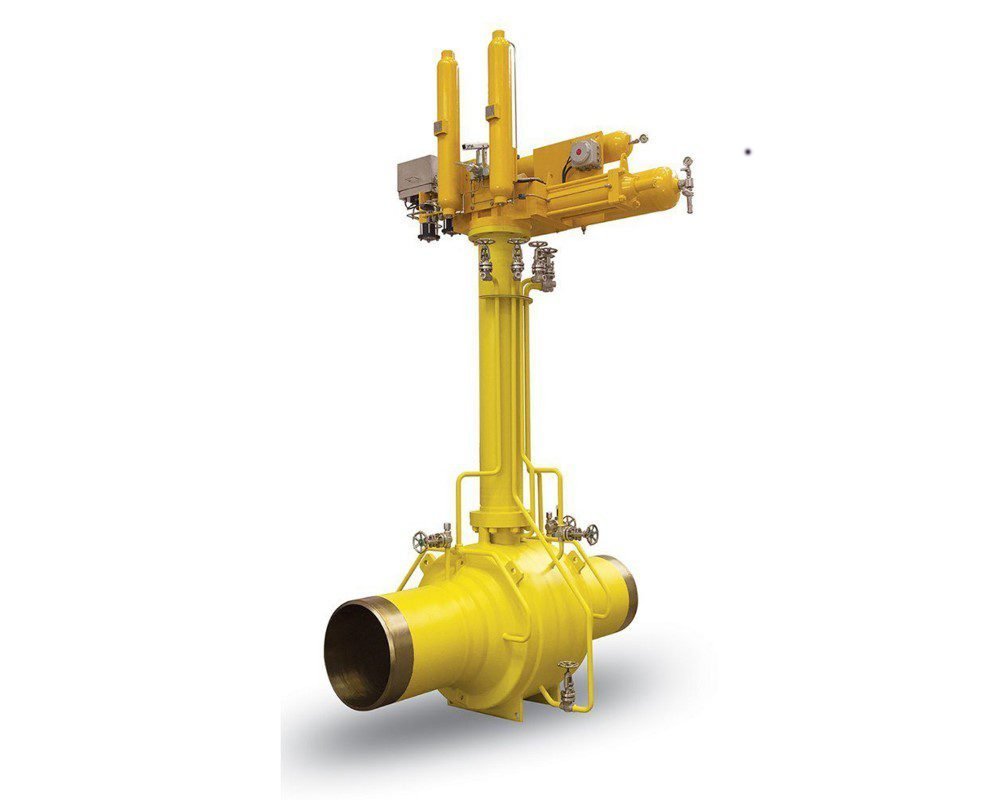
Overview
A fully welded ball valve is a robust and reliable type of valve designed for applications requiring high pressure, leak-proof performance, and minimal maintenance.
Key features
- Leak-proof Design: The fully welded construction eliminates leak paths associated with threaded connections and flanges, crucial for critical applications.
- High Pressure and Temperature Rating: Can withstand high pressures and temperatures due to the robust construction and forged materials.
- Durability and Strength: The forged body and welded construction provide exceptional strength and resistance to wear and tear.
- Low Maintenance: The simple design and minimal moving parts contribute to lower maintenance requirements.
- Bidirectional Flow: Allow flow in either direction, offering flexibility in piping layouts.
- Fire-Safe Option: Available in fire-safe designs that maintain integrity and prevent leakage during fire events (depending on the specific valve and certifications).
Technical specifications
- Size Range
- 2 – 24 NPS, DN50 - DN600
- Body Materials
- ASTM A216, A105, A350, A182, A351, A352, A890, A995.
- Temperature Range
- -29°C to 450°C
- Ball Materials
- ASTM A216, A105, A350, A182, A351, A352, A890, A995.
- Maximum Allowable Operating Pressure
- ANSI 150#, ANSI 300#, ANSI 600# , ANSI 900#, ANSI 1500#, ANSI 2500#
- Seat Materials
- PTFE, NYLON, PEEK, NBR, KELF, ENP (Electroless nickel plating), HC (Hard chrome).
- Shutoff Rating
- Bidirectional Bubble-tight
- Body Style
- Flanged End, Butt Weld, FE V/s BW
- Design Standard
- API 6D, ASME 16.34
- Flange Drilling
- ASME B16.5
- Testing Standard
- API 598, ISO 5208, EN 12266-1
- Face To Face
- ASME B16.10
- Applications
- Oil & Gas, Wastewater, Seawater, Petrochemicals
Applications
- Oil & Gas
- Wastewater
- Seawater
- Petrochemicals
Benefits
- Enhanced Safety: Leak-proof design and ability to handle high pressures contribute to a safer operating environment.
- Reduced Emissions: Minimizes fugitive emissions due to the leak-proof construction, important for environmental considerations.
- Lower Maintenance Costs: Simple design and minimal moving parts translate to less frequent maintenance needs.
- Long Service Life: The robust construction and high-quality materials contribute to a long and reliable service life.
- Versatility: Suitable for a wide range of applications across various industries due to their pressure rating, bidirectional flow, and material options.
- Fully welded ball valves offer a combination of leak-proof operation, high-pressure capabilities, durability, and lower maintenance requirements, making them ideal for demanding industrial applications.
Frequently asked questions
The main advantages of fully welded ball valves include:
- **High-pressure and temperature ratings:** Can handle more demanding operating conditions due to the robust construction.
- **Reduced maintenance needs:** Simpler design with minimal moving parts translates to less frequent maintenance.
- **Higher initial cost:** The complex manufacturing process can make them more expensive than standard ball valves.
- **Limited size availability:** May not be readily available in all sizes compared to standard ball valves.
These valves are ideal for critical applications requiring:
- **Leak-proof operation:** Environments where fugitive emissions are a concern.
D. What are some things to consider when selecting a fully welded ball valve?
- **Body and ball material compatibility:** Materials should be compatible with the fluids being handled and operating temperature.
- **Actuation type:** Choose manual, pneumatic, or electric actuation based on your needs.
E. How do fully welded ball valves compare to flanged ball valves?
- **Flanged:** Easier to install/remove for maintenance, potentially lower cost, but more susceptible to leaks at flange connections and may have lower pressure ratings.
Application engineering
Specify your requirement.
Share your process conditions, required configuration and quantity. Our team will confirm suitable options and available documentation.
Thank you — enquiry received
An application engineer will review your requirement and reply within one working day.