
Ball Valves
3 Way Multiport Ball Valve
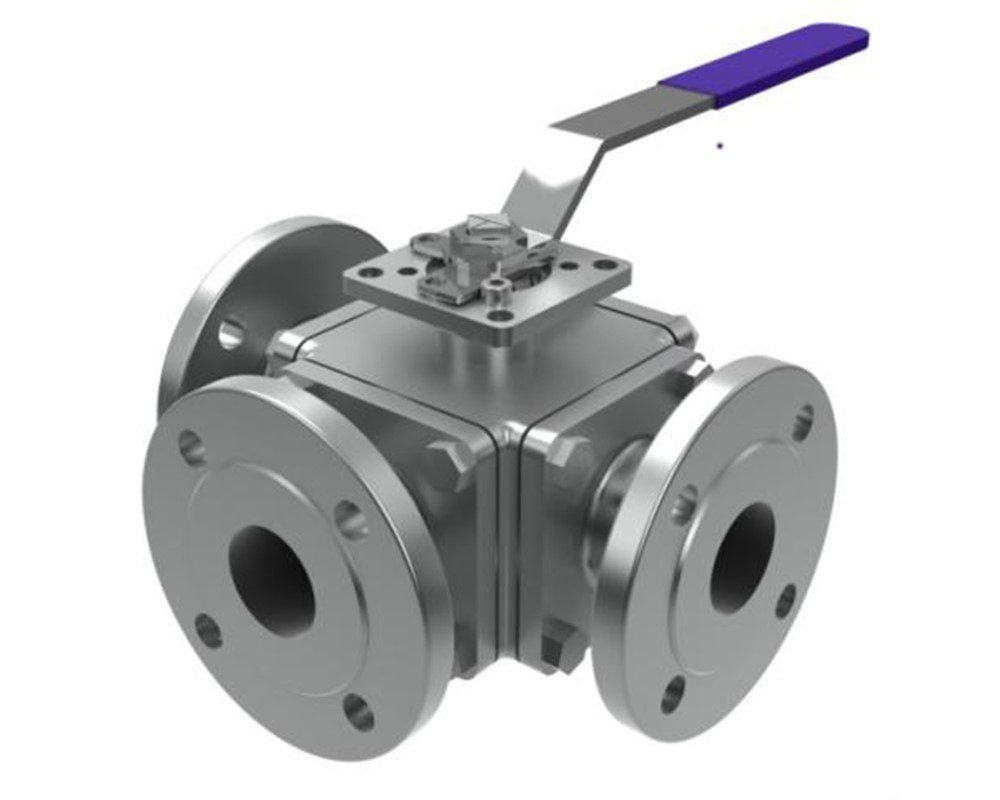
L-port or T-port ball valve for diverting, mixing or switching flow between three lines, replacing multiple two-way valves with a single unit.
Overview
Three-way multiport ball valves, also known as three-way ball valves, are a versatile type of valve used to control the flow of fluids or gases in multiple directions.
Key features
- Multi-Port Design: Three connection points for controlling flow between different lines.
- Ball with Internal Passages: Rotates to connect, block, or divert flow paths.
- Port Options:Typically available in full or standard port versions.
- Full Port: Larger internal diameter matching the pipe size for minimal flow restriction.
- Standard Port: Smaller internal diameter compared to the pipe size.
- Seating: Typically has three seats, one for each port, ensuring a tight seal in all flow configurations.
- Actuation: Can be manually operated with a lever or handle, or automated using pneumatic or electric actuators.
Technical specifications
- Size Range
- 1/2 – 14 NPS, DN15 - DN400
- Body Materials
- Cast iron, ni-resist, aluminum, carbon steel, 316 steel
- Temperature Range
- to 400°F (200°C)
- Stem Materials
- Stainless Steel
- Maximum Allowable Operating Pressure
- 150# 300#
- Seat Materials
- PTFE, PEEK
- Shutoff Rating
- Bidirectional Bubble-tight
- Plug Materials
- Stainless Steel
- Body Style
- Side Entry
- Design Standard
- API 6D, ISO 17292
- Flange Drilling
- ASME B16.5
- Testing Standard
- ISO 5208, EN 12266-1
- Face To Face
- ASME B16.10
- Applications
- Oil and Gas, Process, Paper & Pulp, Dairy, Potable Water, Wastewater,
Applications
- Oil and Gas
- Process
- Paper & Pulp
- Dairy
- Potable Water
- Wastewater
Benefits
- Flow Control Versatility: Control flow in multiple directions with a single valve, simplifying control systems.
- Reduced Piping Complexity: Replaces multiple two-way valves, leading to a more streamlined and space-saving piping layout.
- Compact Design: Smaller footprint compared to using multiple two-way valves for achieving the same functionality.
- Multiple Flow Path Options: T-port and L-port configurations offer flexibility in flow routing based on application needs (depending on the specific design).
- Leak-Proof Operation: Tight-seating design minimizes leakage, crucial for critical applications.
- Wide Range of Applications: Suitable for various tasks like flow switching, diverting flow, mixing fluids, and isolation.
- Cost-Effective: While the initial cost might be slightly higher than multiple two-way valves, they offer long-term value through simplified installation, reduced maintenance needs, and smaller space requirements.
- Things to Consider When Selecting a Three-Way Multiport Ball Valve:
- Flow Path Configuration (T-port or L-port): Choose based on desired flow control needs.
- Port Size and Material: Ensure compatibility with your piping system and fluids.
- Pressure and Temperature Rating: Select a valve exceeding your application’s requirements.
- Actuation Type: Manual, pneumatic, or electric based on automation needs.
- Three-way multiport ball valves offer a valuable combination of functionality, space-saving design, reliable sealing, and cost-effectiveness for controlling flow direction in various industrial applications.
Frequently asked questions
There are two main body styles for three-way multiport ball valves:
- **L-port:** The ports are arranged in an L-shape. The ball core has two passages for connecting adjacent ports. This can allow for three flow path combinations (often with a central “off” position where all ports are blocked).
- **Flow control versatility:** Control flow in multiple directions with one valve, simplifying control systems.
- **Compact design:** Smaller footprint compared to using multiple two-way valves.
- **Leak-proof operation:** Tight-seating design minimizes leakage, crucial for critical applications.
- **Cost-effective:** While the initial cost might be slightly higher than multiple two-way valves, they offer long-term value through simplified installation, reduced maintenance needs, and smaller space requirements.
- **Potentially higher initial cost compared to single-function valves.**
- **Flow path options may be limited compared to four-way multiport ball valves.**
These valves are used in various industries for flow control:
- **Mixing Fluids:** Combining two fluids in a controlled manner.
- **Pump By-Pass Lines:** Allowing flow to bypass a pump for maintenance or pressure relief.
E. What are some things to consider when selecting a three-way multiport ball valve?
- **Port Size and Material:** Ensure compatibility with your piping system and the fluids being handled.
- **Actuation Type:** Decide on manual, pneumatic, or electric actuation depending on automation needs.
[Download](https://nishthaglobal.com/ball-valves/3-way-multiport-ball-valve/#)
Application engineering
Specify your requirement.
Share your process conditions, required configuration and quantity. Our team will confirm suitable options and available documentation.
Thank you — enquiry received
An application engineer will review your requirement and reply within one working day.