
Ball Valves
Lined Floating Ball Valve
PFA / FEP lined body and ball for corrosive acids, alkalis and chlorine service where metallic valves would quickly corrode.
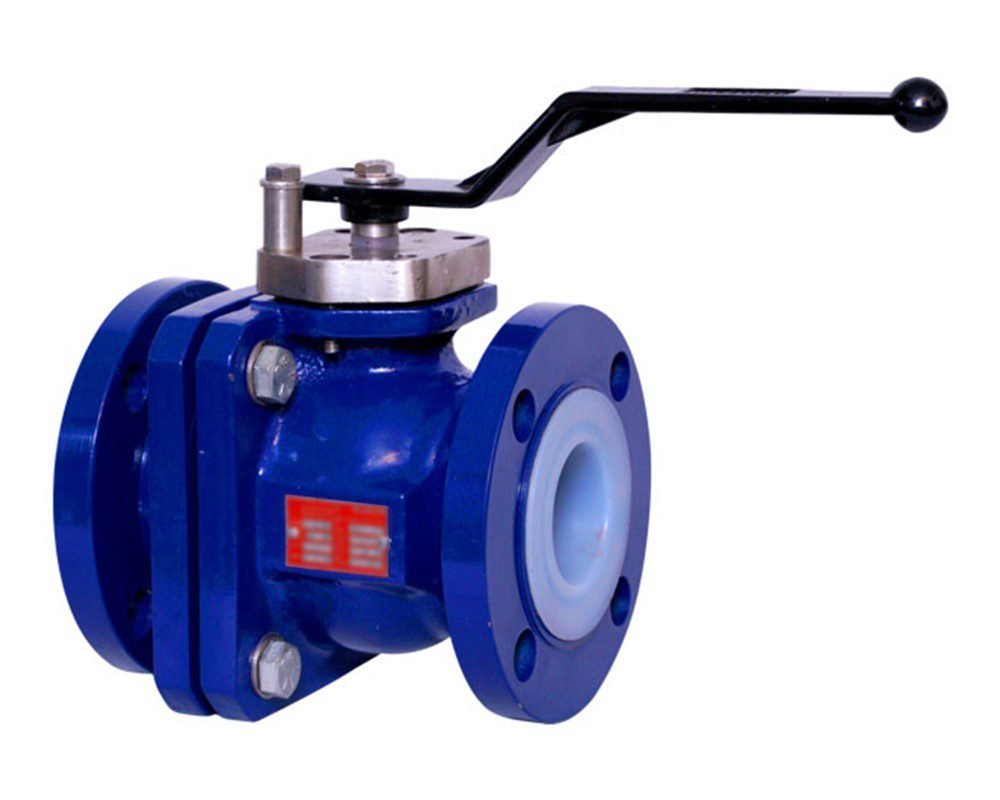
Overview
A lined ball valve is a type of valve that has a lining material on the inner surfaces of its body and ball. This lining is typically made of materials such as PTFE (polytetrafluoroethylene) or similar fluoropolymers.
Key features
- Corrosion Resistance: The primary advantage of a lined ball valve is its resistance to corrosion, particularly in aggressive chemical environments. The lining protects the valve body and ball from chemical attack, ensuring longevity and reliability.
- Smooth Flow: The smooth surface of the lining helps maintain smooth fluid flow, reducing turbulence and pressure drop across the valve.
- Chemical Compatibility: Lined ball valves are suitable for handling a wide range of corrosive fluids and gases, including acids, bases, solvents, and other aggressive chemicals.
- Temperature Resistance: The lining material is chosen for its ability to withstand a range of temperatures, making lined ball valves suitable for both cryogenic applications and high-temperature processes.
- Biocompatibility: In industries such as pharmaceuticals and food processing, where cleanliness and hygiene are critical, lined ball valves are used because the lining material is non-toxic and inert.
- Versatility: Lined ball valves are used in various industries, including chemical processing, oil and gas, water treatment, pulp and paper, and more, wherever corrosive fluids need to be controlled.
- Reduced Maintenance: The corrosion-resistant properties of the lining reduce the need for maintenance and replacement due to wear and degradation caused by chemical exposure.
- Cost-Effective: While typically more expensive than standard metal valves, lined ball valves are cost-effective in corrosive environments because they reduce downtime and replacement costs over their operational life.
Technical specifications
- Size Range
- 1/2 – 12 NPS, DN15 - DN300
- Body Materials
- ASTM A216, A105, A350, A182, A351, A352, A890, A995.
- Temperature Range
- -29°C to 450°C
- Ball Materials
- ASTM A216, A105, A350, A182, A351, A352, A890, A995.
- Maximum Allowable Operating Pressure
- ANSI 150#, ANSI 300#, ANSI 600# , ANSI 900#
- Seat Materials
- PTFE, NYLON, PEEK, NBR, KELF, ENP (Electroless nickel plating), HC (Hard chrome).
- Shutoff Rating
- Bidirectional Bubble-tight
- Body Style
- Flanged End, Butt Weld, FE V/s BW
- Design Standard
- ISO 17292, API 6D, ASME 16.34
- Flange Drilling
- ASME B16.5
- Testing Standard
- API 598, ISO 5208, EN 12266-1
- Face To Face
- ASME B16.10
- Operation
- Pneumatic Actuator, Electrical Actuator
- Applications
- Oil & Gas, Wastewater, Seawater, Petrochemicals, Chemicals,Sugar, Paper
Applications
- Oil & Gas
- Wastewater
- Seawater
- Petrochemicals
- Chemicals
- Sugar
- Paper
Benefits
- Smooth Operation and Tight Shut-Off: Lined ball valves typically provide smooth operation and tight shut-off. The lining material ensures low friction between the ball and the valve body, allowing for precise control of flow rates and minimizing leakage.
- Wide Temperature Range: The lining materials used in lined ball valves are selected for their ability to withstand a broad range of temperatures. This makes them suitable for both cryogenic applications and high-temperature processes.
- Longevity and Durability: Due to their corrosion resistance and robust construction, lined ball valves have a longer operational life compared to unprotected metal valves. They require less frequent replacement and maintenance, reducing downtime and overall costs.
- Environmental Safety: By preventing leaks and ensuring reliable fluid control, lined ball valves contribute to environmental safety and regulatory compliance in industries where hazardous chemicals are handled.
Frequently asked questions
There are two main configurations for four-way multiport ball valves:
- **Double L-port:** This design is similar to the L-port but with two sets of L-shaped ports on opposite sides of the valve body. This allows for four potential flow path combinations.
- **Flow control versatility:** Control flow direction in multiple lines with one valve, simplifying control systems.
- **Compact design:** Smaller footprint compared to using multiple two-way valves.
- **Leak-proof operation:** Tight-seating design minimizes leakage, crucial for critical applications.
C. What are the advantages of using lined butterfly valves?
D. What are some applications for four-way multiport ball valves?
- **Diverting flow:** Selecting between supply and discharge lines.
- **Instrument isolation:** Isolating instruments for maintenance while maintaining flow in the main line.
- **Sample collection systems:** Routing fluid samples to different analysis points.
- **Flow path configuration (L-port or double L-port):** Choose based on the desired flow control needs.
- **Pressure and temperature rating:** Select a valve exceeding your application’s requirements.
Application engineering
Specify your requirement.
Share your process conditions, required configuration and quantity. Our team will confirm suitable options and available documentation.
Thank you — enquiry received
An application engineer will review your requirement and reply within one working day.